
Services
This is a thoughtful and guided process designed to support both your safety and your inner experience. Each step is approached with care so you feel prepared, supported, and able to move through the process at a pace that feels right for you.
Preparation is an important part of this work. Before treatment, we take time to talk about your mindset and intentions, helping you feel informed, grounded, and gently supported as you move into the experience. This foundation allows the work to feel more meaningful, rather than overwhelming, and helps you stay connected to yourself throughout the process.
The Experiential Process
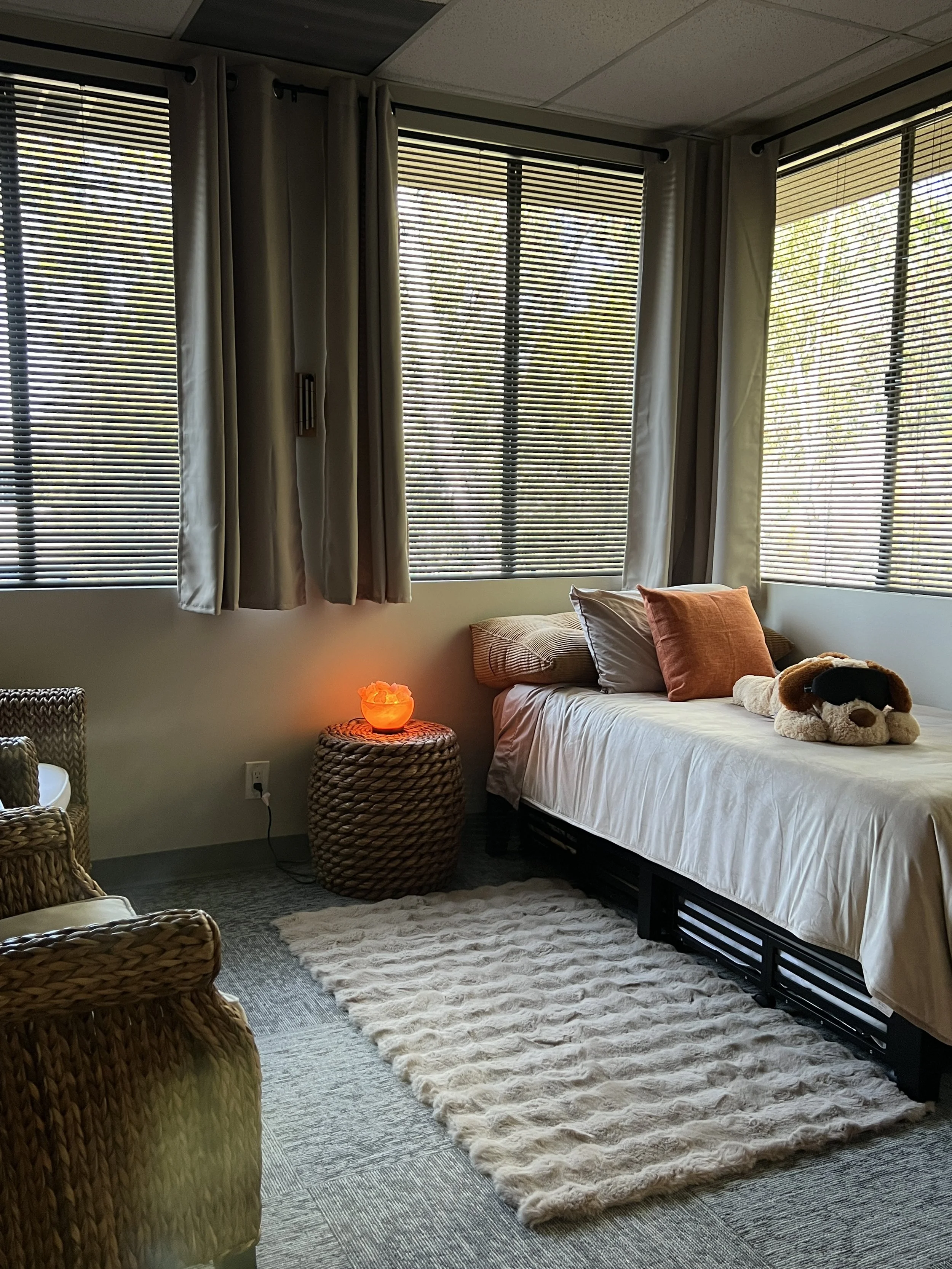
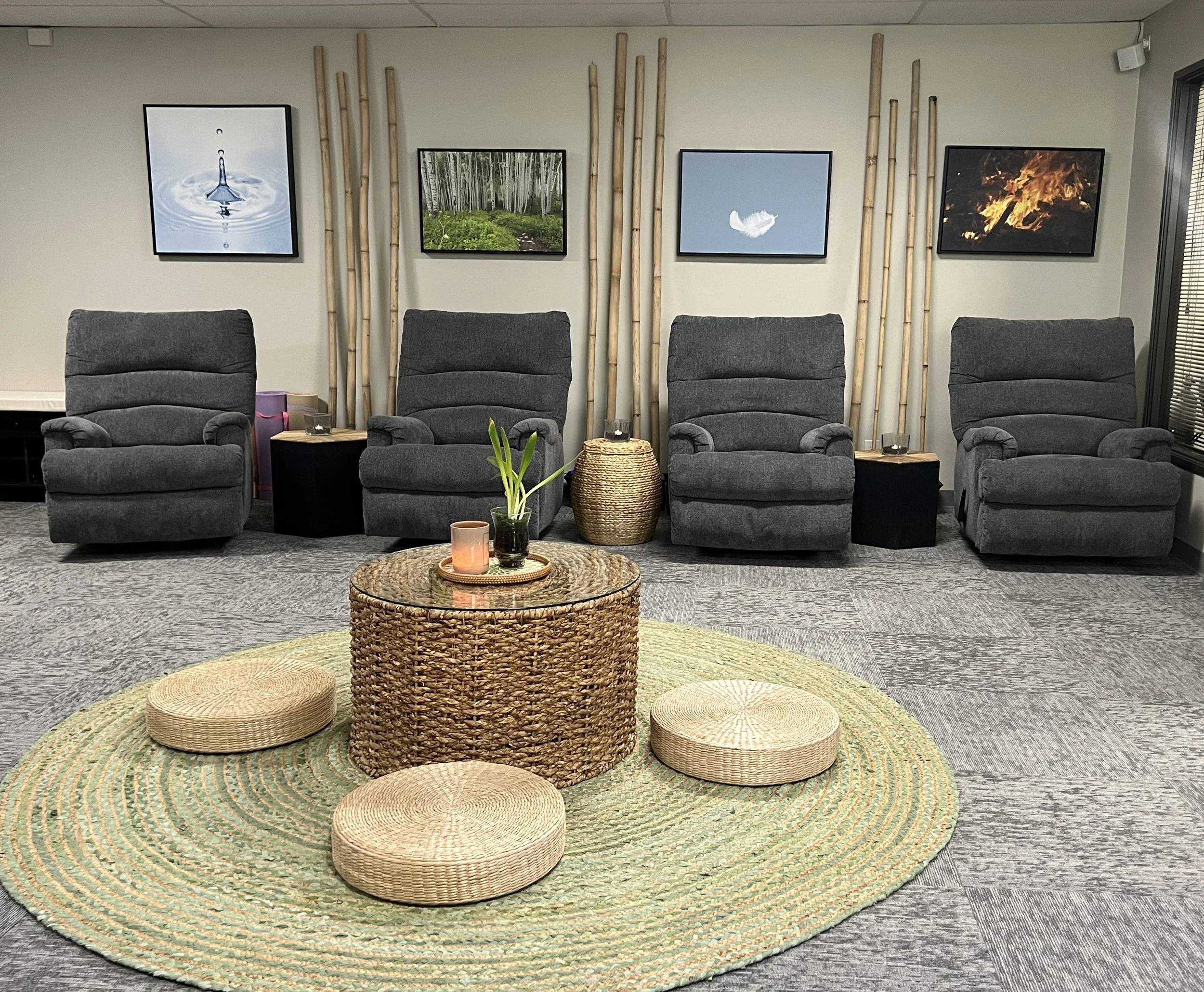
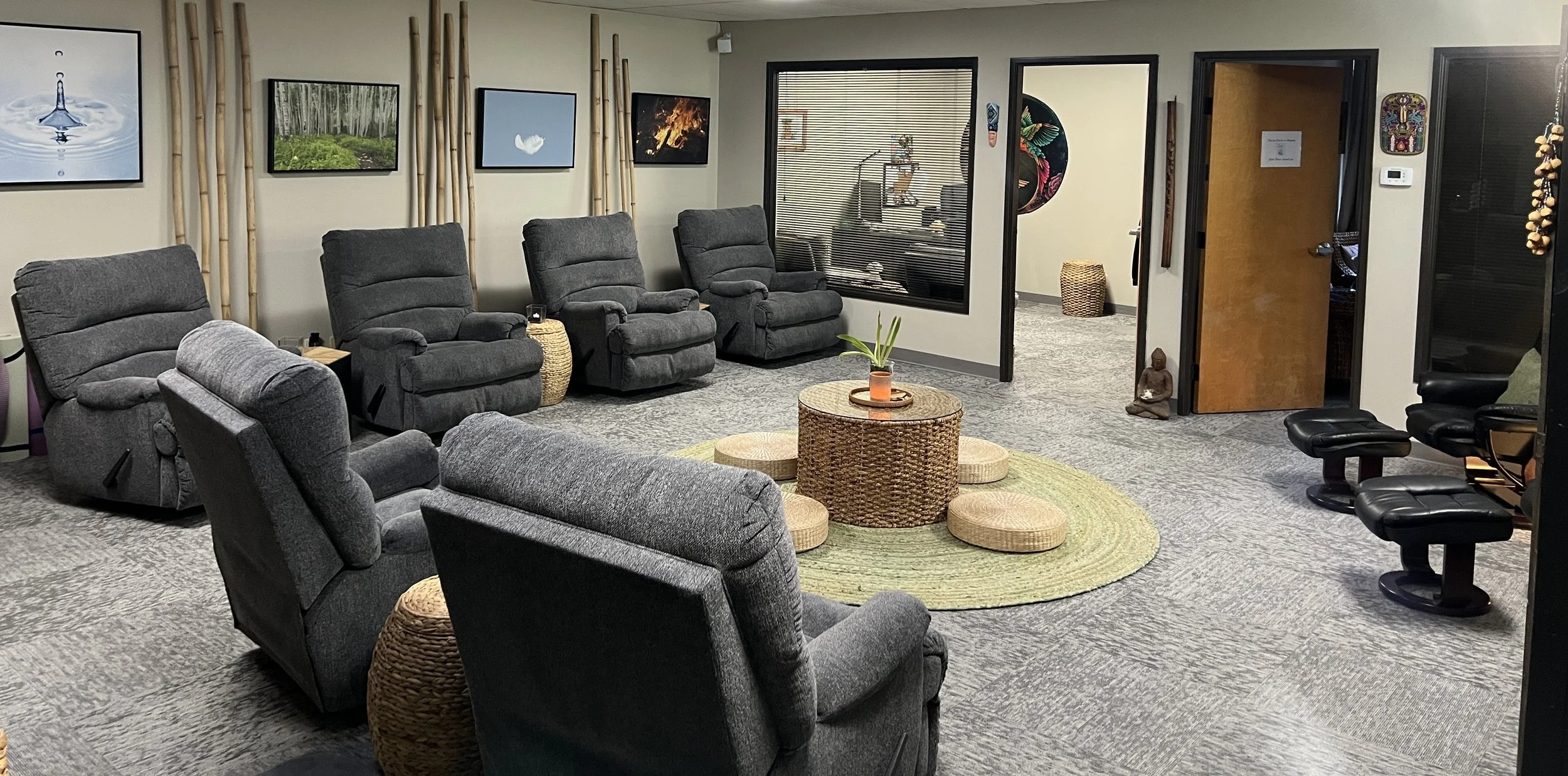
Sessions take place in private, medicine-oriented space representing the four elements of water, air, earth, and fire. We have an individual therapy room as well as group space. This space is designed to provide safety, comfort, and inward-focus.
Our Space
Individual Therapy Room
Group Ketamine Space
Group Therapy Space
Getting Started
Before treatment is initiated, you’ll start by completing a brief intake form. This will then be followed by a one-hour, comprehensive consultation with our medical/psych provider where we take the time to get to know you more fully—your medical and mental health history, current medications, and expectations.
This visit is also a space for conversation. We’ll walk through the potential benefits, risks, and alternatives together, and talk about what you can expect from the process. Our goal is for you to feel informed, supported, and confident in your decision.
If you choose to move forward, we’ll review and complete the informed consent process before beginning treatment.
Session Preparation
After your initial consultation, we’ll meet for a 60-90 minute preparation session. This time is set aside to help you feel more settled, supported, and ready as you approach your medicine experience.
Together, we’ll gently explore your intentions, what you’re hoping to move toward, and anything that may feel like it’s in the way. You’ll be guided at your own pace, in a way that feels comfortable and respectful of where you are. The focus is not on doing it “perfectly,” but on helping you feel more connected, grounded, and open to the process.
In the days leading up to your session, you will be encouraged to spend time in quiet reflection or engage in simple grounding practices such as meditation, breath work, exercise. We also offer supportive modalities such as Reiki, breath work, and trauma release exercises to help you arrive feeling more centered and prepared. This is a time to gently orient toward what you’d like to cultivate.
On the day of your treatment, a few simple steps can help support your comfort and safety:
Avoid eating for 4 hours before your session
Avoid fluids for 2 hours prior
Wear comfortable clothing, including a short-sleeve shirt, slippers or slip-on shoes
Arrange for a responsible adult to take you home—driving is not permitted until the following day
The Ketamine Journey
Your ketamine session is a private, carefully supported experience, with your facilitator(s) present at all times—one of whom is a medical provider. Each session is tailored to you, with your comfort, safety, and inner-healing at the center.
The medicine portion typically lasts about 60–90 minutes and takes place in a calm, comfortable, and quiet setting. Ketamine is administered under medical supervision, most commonly through intramuscular injection, and in some cases, as a sublingual troche.
During your session, you’ll be invited to rest comfortably, with an eye mask, a soft, weighted blanket, and thoughtfully curated music to support an inward focus. From there, your experience unfolds in its own way. You may notice imagery, memories or insights. You may feel an emotional release, or simply a sense of calm or spaciousness. There is no right or wrong way to experience this process.
Throughout your journey, your facilitators remain present—quietly holding the space, offering reassurance if needed, and supporting you in feeling safe and grounded.
After your session, we allow time for a gentle transition. You may share anything that feels present for you in the moment, or simply sit quietly and begin to reorient. This is a soft landing—an opportunity to begin noticing what’s emerging, without needing to make sense of it right away. You’ll be offered warm tea or water and light, nourishing snacks to help support your body as you gradually return.
We see integration as a central part of the healing process. The medicine can open a window, but it’s through gentle reflection and ongoing support that what you experience begins to take shape in your life.
After your session, we create space for a soft landing. You’re invited to share anything that feels present, or simply rest and begin to settle. This initial integration is intentionally light, just enough to honor what has come forward, without asking you to make sense of it too quickly.
Your deeper integration session is then scheduled within 48–72 hours, a time when the brain is in a heightened state of neuroplasticity—more open, flexible, and receptive to change. During this window, you may find it easier to reflect on your experience with greater clarity, gently beginning to understand what emerged and how it connects to your life.
In this space, we’ll explore insights, emotions, and patterns together at a pace that feels supportive and unhurried. Often, this process brings awareness to parts of yourself that may have been just out of reach. Here, they can be met with curiosity and compassion, allowing new ways of relating to yourself to begin to take root.
Between sessions, you may be encouraged to engage in simple, nourishing practices that help your experience continue to unfold. This might include mindfulness, breath work, gentle movement such as yoga or Qi gong, journaling, creative expression, Reiki, or other forms of self-connection. These practices are not meant to be prescriptive, but supportive ways of staying close to yourself during this important period of openness and change.
Integration is not a single moment, but an ongoing, evolving process. You may choose to continue this work with your integrationist, or we can help connect you with a therapist for additional support. We also encourage maintaining relationships with your existing therapist or psychiatrist, as continuity of care can be an important part of lasting change.
Integration
Most people begin to feel more like themselves within about an hour after their session, though everyone’s experience is a little different. We allow plenty of time for you to rest and recover at your own pace, so you feel steady and ready before leaving.
Because ketamine can temporarily affect coordination and judgment, you’ll need someone to drive you home, and we ask that you avoid driving or making important decisions until the following day.
In the hours and days after your session, gentle self-care can go a long way. You may feel called to move more slowly—allowing time for rest, quiet reflection, or simply being in a calm, supportive environment. Time in nature, journaling, or moments of stillness can help what surfaced during your session begin to settle and integrate.
If possible, we encourage giving yourself space the following day, rather than returning immediately to work or a full schedule. Nourishing your body with wholesome foods, surrounding yourself with calming, supportive input, and limiting exposure to stressful or overstimulating media can help you stay connected to the experience and support your mind’s natural capacity for change.
This is a time to be gentle with yourself, to listen, to rest, and to allow the process to continue unfolding in its own way. We’re here to support you, every step of the way.
Recovery and After Care
Other Services
Reiki
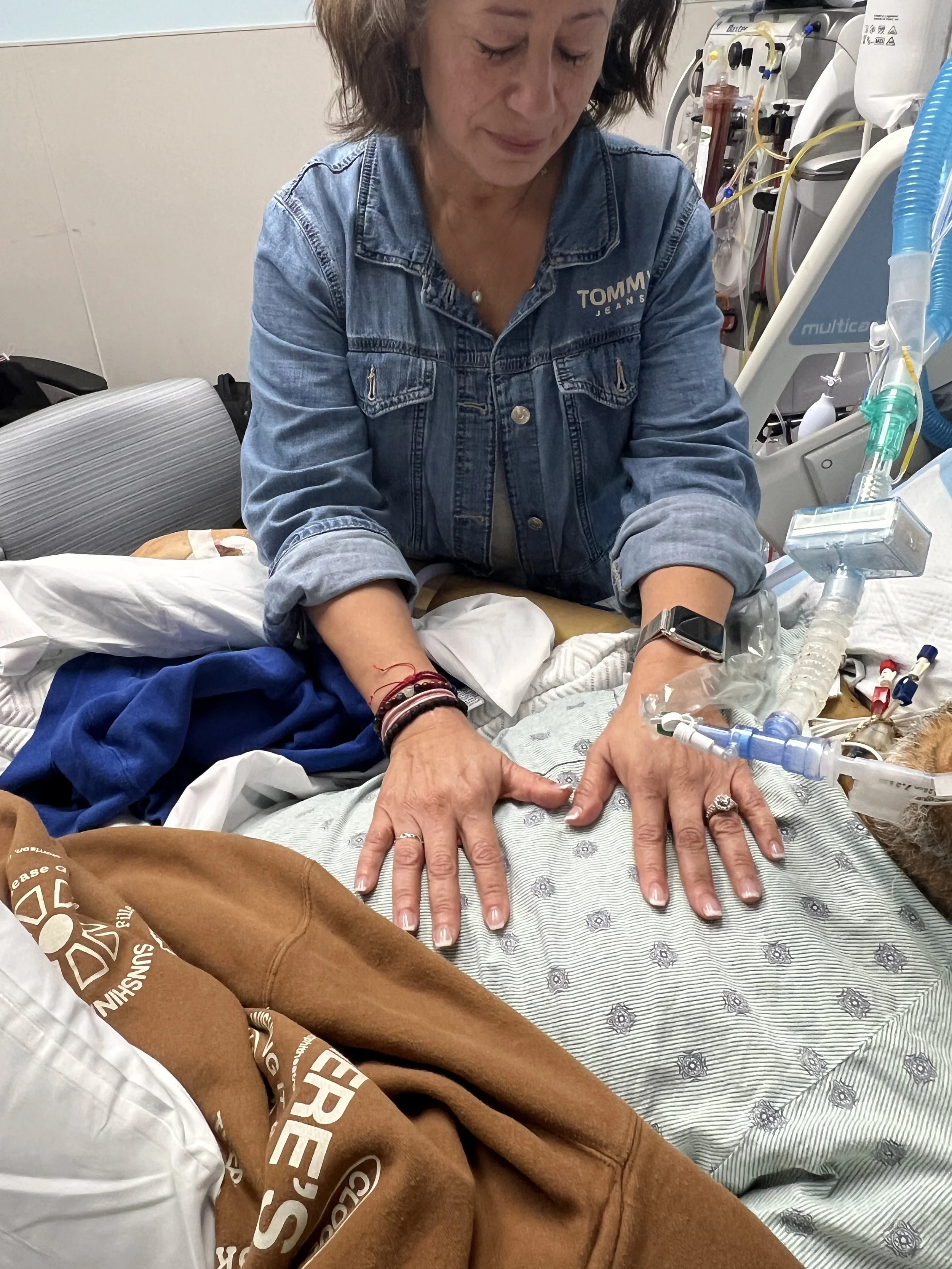
Reiki is not a religion, nor is it tied to any one belief system. It is a gentle, complementary healing practice that can be experienced by anyone—regardless of background or faith.
Reiki (ray-kee) means “universal life energy.” It is a Japanese technique in which a practitioner places their hands lightly on or just above the body to support your body’s natural healing response. Rather than treating a single symptom, Reiki supports the whole person—mind, body, and spirit.
This work is subtle, yet deeply supportive. Reiki can help promote relaxation, improve sleep, ease physical discomfort, and support emotional processing—especially during times of grief, stress, or transition.
At its core, Reiki creates a calm, non-judgmental space where you can soften, release, and reconnect. We are simply there to support the movement of energy and hold space for your healing to unfold.
Breath is one of the most powerful tools we carry—and a vital part of our ketamine sessions.
Your breath helps guide the experience, keeping you grounded and connected as deeper layers begin to surface. It supports your nervous system, helps you move through emotions, and creates a sense of safety within your body.
There is no “right” way to do it. It’s about listening, allowing, and trusting your body.
We are there with you, helping you use your breath as an anchor—so what arises can move through, rather than stay stuck.
Breathwork

Trauma is not just something we think about—it’s something the body carries.
Trauma Release Exercises (TRE) are gentle, body-based movements that help release stored tension and stress by activating the body’s natural tremoring response. This process allows the body to discharge what it has been holding, supporting healing from the inside out.
This work can help reduce stress and anxiety, improve sleep, ease physical tension, and support emotional regulation—while deepening your connection to your body.
We guide you through this process with care, creating a safe space where your body can begin to let go, at its own pace.
Trauma Release / Somatics

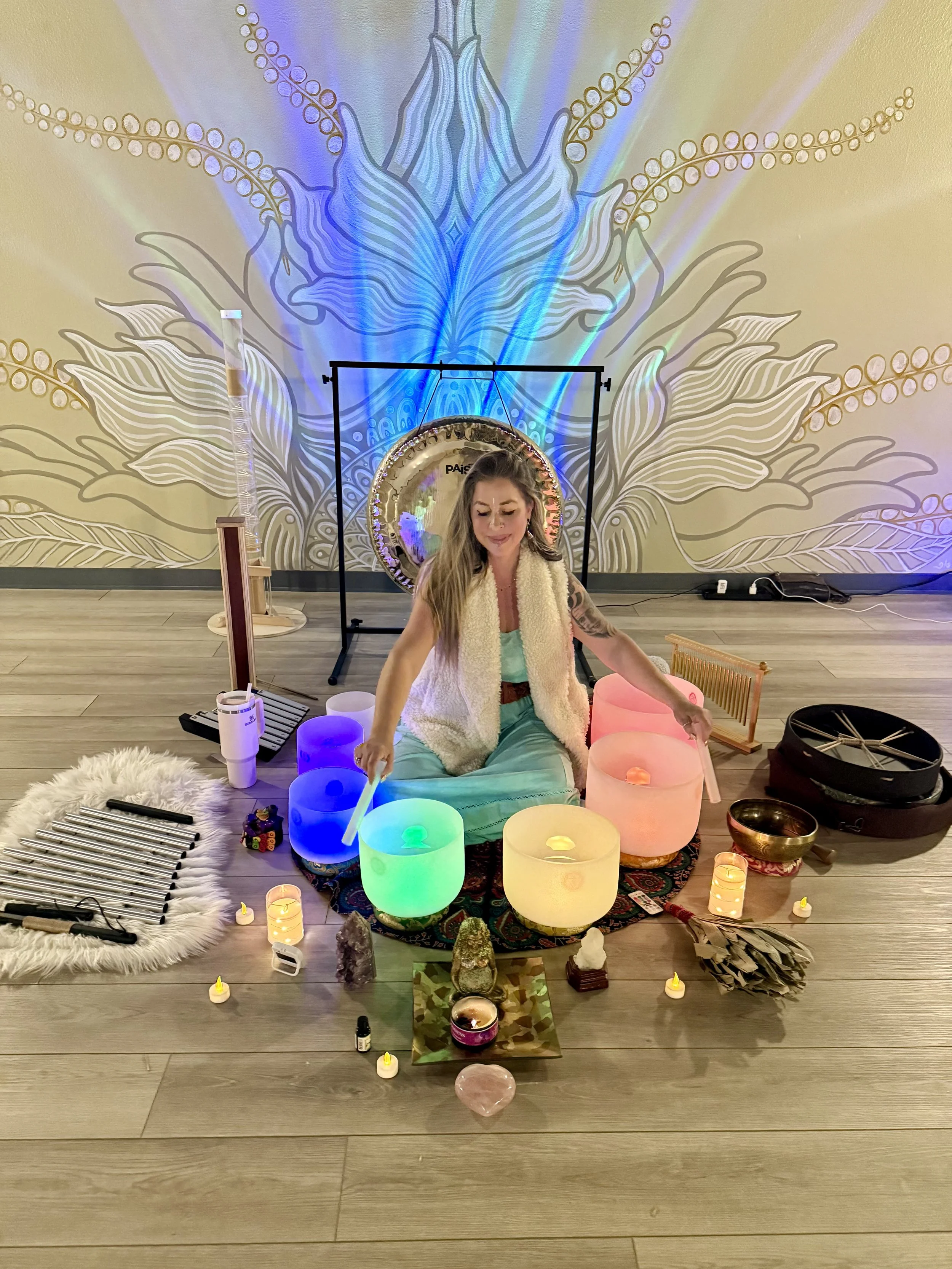
Sound baths activate the parasympathetic nervous system, which allows for the balancing of emotions, energy release, and welcoming acceptance. Participants are guided through a meditative journey while listening to and being supported by the beautiful vibrations, energy, and frequencies of various instruments. These sounds will help you relax your breathing, reduce pain levels, sleep better, and release emotions and traumas, thereby reducing anxiety and facilitating relaxation.
Sound Bath Healing
Emotional Support

Navigating the myriad emotions that arise requires compassion and understanding. Our resources offer guidance on managing these feelings, including strategies to cope with anxiety, depression, demoralization, and fear. We emphasize the importance of acknowledging and addressing these emotions as part of the healing process.
Traditional and Indigenous Healers integrate traditional plant medicines and ancestral wisdom with modern therapies, offering a holistic approach to emotional, spiritual, and physical well-being. Traditional healing provides a harmonious and complementary path to deeper healing. Whether working alongside medical providers or independently, Traditional Healers offer non-invasive, culturally informed practices such as sacred plant guidance, ceremonial support, energy cleansing, storytelling, and guided meditation. These practices enhance treatments by promoting deeper emotional integration, reduced anxiety, enhanced relaxation, and a stronger connection to self, nature, and ancestry. By honoring Indigenous traditions, this approach fosters greater meaning and purpose in the healing journey, creating a compassionate, inclusive model of care that blends modern science with ancestral wisdom for comprehensive mind, body, and spirit healing.
Traditional Healing


Mandala art therapy is a type of psychotherapy that uses coloring and geometric patterns to help you find balance and relieve stress. The word "mandala" comes from Sanskrit and means "circle" or "completion." Mandala art therapy can assist individuals to make sense of their journeys and integrate the lessons learned.
The process of creating or coloring a mandala is therapeutic and symbolic. It's not about the final product, but about the journey of finding a creative way to express yourself. Anyone can try mandala art therapy, even if you are not an artist.
Mandala Art Therapy

An integration circle provides a trusted and confidential environment to process, share, and discuss experiences that may have been difficult, feel incomplete, or puzzling, or to prepare for upcoming journeys. It is a place where there is no judgment, and you are afforded the space and the support needed to grow. Everyone in the circle is there because they want to be there. They are attentive, interested, and genuinely present. As a result, all ideas, expressions, experiences, and conversations are encouraged and welcomed. Oftentimes, when sharing and hearing others share, missing pieces of the puzzle come together, allowing the group as a whole to grow and heal. This is YOUR circle, where you are always welcomed!
Integration Circle